Last week marked my third engagement training Chow Tai Fook's design team on AI adoption. For context, Chow Tai Fook operates 5,900+ retail outlets worldwide with annual sales exceeding HK$100 billion. When a company of this scale invests in AI training, they're not looking for generic tutorials - they want workflows that integrate into existing processes.
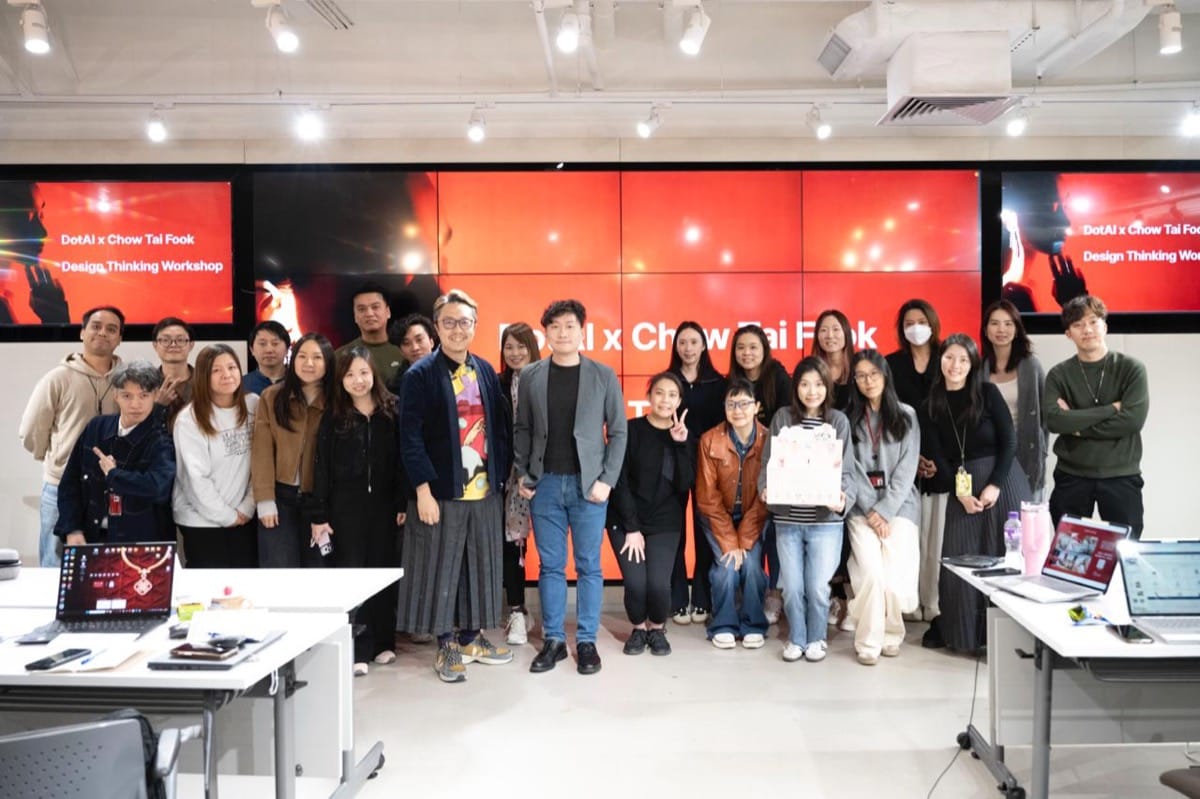
The Workshop Format: Hackathon Meets Design Thinking
Instead of a traditional lecture format, we ran a compressed hackathon where five cross-functional groups competed to create complete Go-To-Market campaign proposals using AI tools. The constraint? They had to produce a pitch-ready concept in under three hours.
The groups were given two creative directions to choose from:
- A Chinese Zodiac themed collection (Year of the Horse)
- A collaboration with the "A Step Into the Past" IP for a Thailand store opening
The Methodology: Plan-Do-Check-Act with AI
The core framework I taught adapts the classic PDCA cycle for AI-assisted design work:
Plan (Ideation): Using ChatGPT and Gemini for market research, customer persona development, and idea validation. I emphasized "storytelling with data" - every creative concept should be grounded in real market insights.
Do (Execution): Visual design using Midjourney and Google's Nano Banana Pro for mood boards and product visualization. The key insight here: text-to-image isn't just about generating pretty pictures. It's about compressing complex concepts into visual communication that stakeholders can instantly grasp.
Check (Collect): Consolidating all research, images, and concepts into NotebookLM. This step transforms scattered ideation into a coherent knowledge base that can answer questions, generate reports, and create presentation materials.
Act (Amplify): Using Lovable to rapidly prototype landing pages that visualize the complete campaign. Participants went from concept to functional website in under 30 minutes.
What I Observed
The Deepseek to Nano Banana Shift
I shared with participants a trend I've noticed in Hong Kong's AI adoption. In early 2025, the most common question I received was "Is Deepseek accurate for fortune-telling?" (Hong Kong people care about fortune, not computing power). By late 2025, the dominant question shifted to "How do I use Nano Banana in Hong Kong?"
This represents a maturation - from novelty and entertainment to practical creative application.
Chat as the Universal Interface
I emphasized that all current AI tools share a common interface: the chat box. Whether you're using Photoshop's Generative Fill, writing code with Copilot, or generating images with Midjourney, you're fundamentally typing prompts into a chat interface.
Understanding this helps demystify AI. It's not magic - it's structured conversation with a very capable system.
The "Thinking Companion" Mindset
One practical tip I shared: customize your AI to be a better thinking partner. My ChatGPT is configured to use Japanese kaomoji instead of emoji and to avoid cold, formal responses. Small adjustments that make brainstorming sessions feel more natural.
The Winning Team's Approach
Team B won with their "Time-Cross Love" concept - an emotional storytelling approach that connected the time-travel romance of "A Step Into the Past" with the eternal commitment symbolized by jewelry. They supported their creative concept with market data showing consistent 8.2% compound annual growth in the luxury jewelry sector through 2030.
The judges noted that their presentation balanced technology with emotional resonance - they captured the feeling of the IP, not just the aesthetics.
The teams that excelled weren't necessarily the most technically proficient with any single tool - they were the ones who knew how to orchestrate multiple tools toward a coherent creative outcome.
