Most AI training in Hong Kong defaults to the Western stack -- ChatGPT, Copilot, Midjourney. When China Travel Service asked me to run a strategy workshop for their management team in July 2025, that default would have been a mistake.
CTS is a century-old Hong Kong brand. Their operations span both sides of the border, serving customers in markets with fundamentally different technology access. ChatGPT is inaccessible in mainland China without a VPN. Copilot requires Microsoft licensing that many China-side operations don't carry. Building executive AI fluency on tools half the business can't access is a waste of a training budget.
So we trained on Doubao and Dreamina instead.
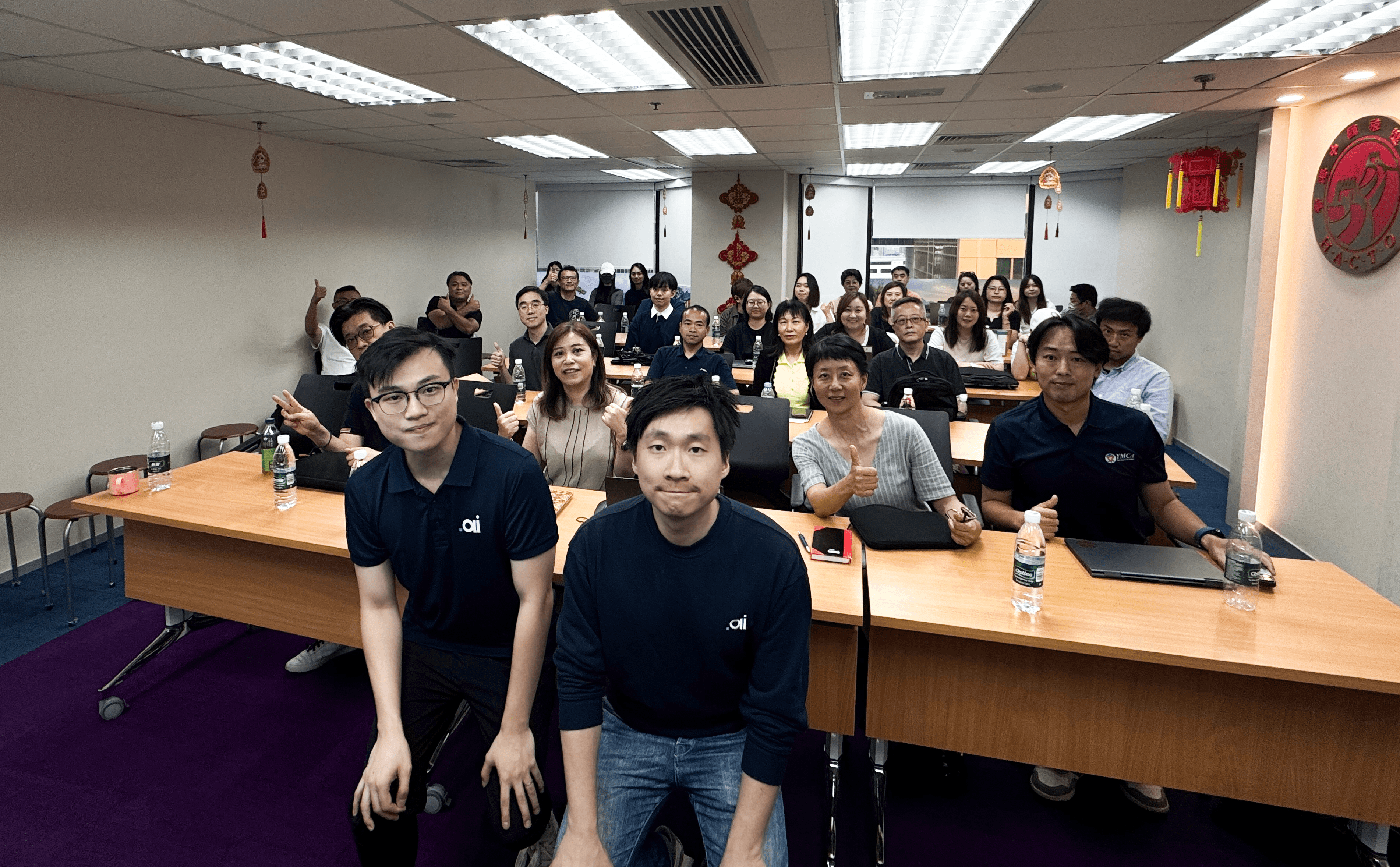
Doubao is ByteDance's AI assistant. Dreamina is their image generation platform. Both work on mobile without a VPN, handle Chinese-language input natively, and are designed for the ecosystem CTS actually operates in. The executives who showed up expecting ChatGPT demos got something more useful: fluency in the tools their China-facing staff could realistically adopt.
The decision that looked practical was actually strategic
Most companies treat tool selection as a logistics question -- what's available, what's licensed, what IT approves. For any business with cross-border operations, it's a strategy question. An executive team trained exclusively on Western AI tools will default to Western-tool thinking when they evaluate China-market initiatives. They'll benchmark against capabilities that don't exist in their operational context, approve vendor proposals they can't evaluate firsthand, and miss platform-native features that have no Western equivalent.
Training CTS leaders on China-native tools didn't just give them hands-on skills. It gave them a working mental model for how AI operates in the market where most of their revenue comes from.
What the session covered
The workshop split roughly into three blocks. The strategic block -- about 70% of the time -- focused on where AI fits in a tourism business: customer feedback analysis at scale, rapid brand-concept testing, content planning across markets. These aren't speculative applications. CTS handles thousands of post-tour surveys, runs constant promotional campaigns, and manages brand positioning across two markets with different platforms. We used real business scenarios, not hypotheticals.
The hands-on block had executives generating brand concept visuals with Dreamina and drafting content plans with Doubao -- working on their own briefs, producing outputs they could discuss with their teams afterward. One exercise -- using AI image generation to produce multiple brand concept directions in minutes instead of weeks of agency coordination -- shifted how several executives talked about creative development. Not because the AI output was final-quality. Because seeing five directions before commissioning any of them changes the conversation with an agency entirely.
The ratio I got wrong, and the one I teach now
I initially framed the session around an 80/20 model -- 80% AI execution, 20% human judgment. That ratio felt right at the time, but it overstates what AI reliably handles and understates what experienced practitioners actually bring. After enough sessions with enough teams, the working ratio I've settled on is closer to 30/70 -- roughly 30% AI execution, 70% human judgment, context, and direction. For executives especially, the human portion is higher, not lower. Their value is knowing what to ask for and recognizing when the output is wrong. AI handles drafting, processing, and generating options. The strategic framing, stakeholder judgment, and quality control stay with the person who understands the business.
The CTS engagement could have been another session where executives watched ChatGPT demos and nodded politely. Instead, the tool decision -- Doubao over ChatGPT, Dreamina over Midjourney -- turned out to be the most strategic call in the whole design. If your business operates in mainland China and your AI training runs on tools your China team can't access, you've trained executives to think in the wrong ecosystem. That's an expensive mismatch to discover six months later.
If you're planning AI strategy training for your management team and want to discuss approaches, connect with me on LinkedIn.
