HKJC's Management Trainee Programme brought me in for two days in April 2025 to teach AI-assisted business communication. The MT Programme rotates future leaders through departments before they settle into permanent roles -- these weren't people who needed to automate tasks. They needed to communicate strategically, and they needed to understand how AI fits into that.
The curriculum was built around what I called "Text-to-Impact" -- treating AI as a thinking tool for business communication, not just a drafting tool. The framework has three layers, each building on the last. Here they are with the kind of prompts we actually practiced, because a framework described in the abstract is a poster, not a skill.
Layer 1: Precision -- how AI interprets your input
Most people prompt like they're texting a colleague who already knows the context. AI doesn't have the context.
A vague prompt: "Write a summary of our project."
A precise prompt: "Summarize the Q3 customer-retention project for a non-technical audience. Cover: what we did, what the results were, what we're doing next. Three paragraphs, under 200 words."
The improvement comes from specifying the audience, naming the scope, and setting a format constraint. We spent the first half-day on this layer alone, because precision in prompting is precision in thinking -- and management trainees headed for leadership roles benefit from both. Participants rewrote the same prompt three or four times, watching the output sharpen each round. The skill transfers directly: anyone who can write a precise prompt can write a better project brief.
Layer 2: Structure -- translating what you need into an output framework
Once the input is precise, the next gap is structural. Most people accept whatever format the AI gives them. That's backwards -- you should define the structure before the model fills it.
A flat prompt: "Help me prepare for the board meeting on regional expansion."
A structured prompt: "I'm presenting a three-minute update on Southeast Asia expansion to the board. Create: (1) an opening statement that frames progress against the timeline we committed to, (2) three bullet points on risks flagged since last quarter, (3) one clear ask -- budget approval for the Thailand pilot. Tone: direct, no hedging."
The structured version produces something you could almost present as-is. The flat version produces a five-paragraph essay you'd have to rebuild entirely. We used Microsoft Copilot for this layer -- its Office integration made it practical for the memos, decks, and reports these trainees produce daily. ChatGPT handled the open-ended work in Layer 1. Perplexity came in for research-backed prompts later. The tools mattered less than the structure.
Layer 3: Context -- role simulation and audience awareness
The final layer calibrates tone and perspective -- the hardest part to teach, and the one that matters most for people in leadership pipelines.
A context-free prompt: "Write an email to the department heads about the new policy."
A context-rich prompt: "You are a management trainee writing to three department heads (Operations, Finance, HR) who were not consulted during this policy's development. They may feel bypassed. Write an email that acknowledges their expertise, explains the rationale, invites their input on implementation, and keeps the tone collegial but not apologetic. Under 250 words."
The context-rich version handles something most templates can't: political awareness. For management trainees rotating through departments, understanding how audience and power dynamics shape communication was at least as valuable as the AI skill itself.
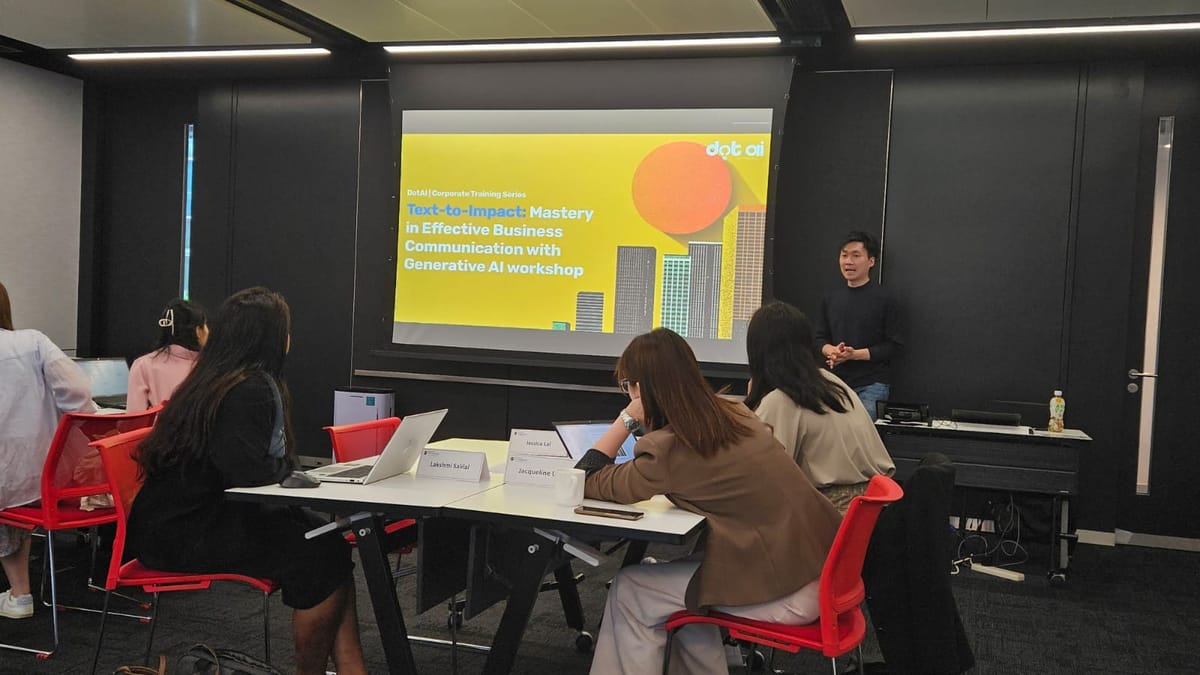
What this looked like in practice
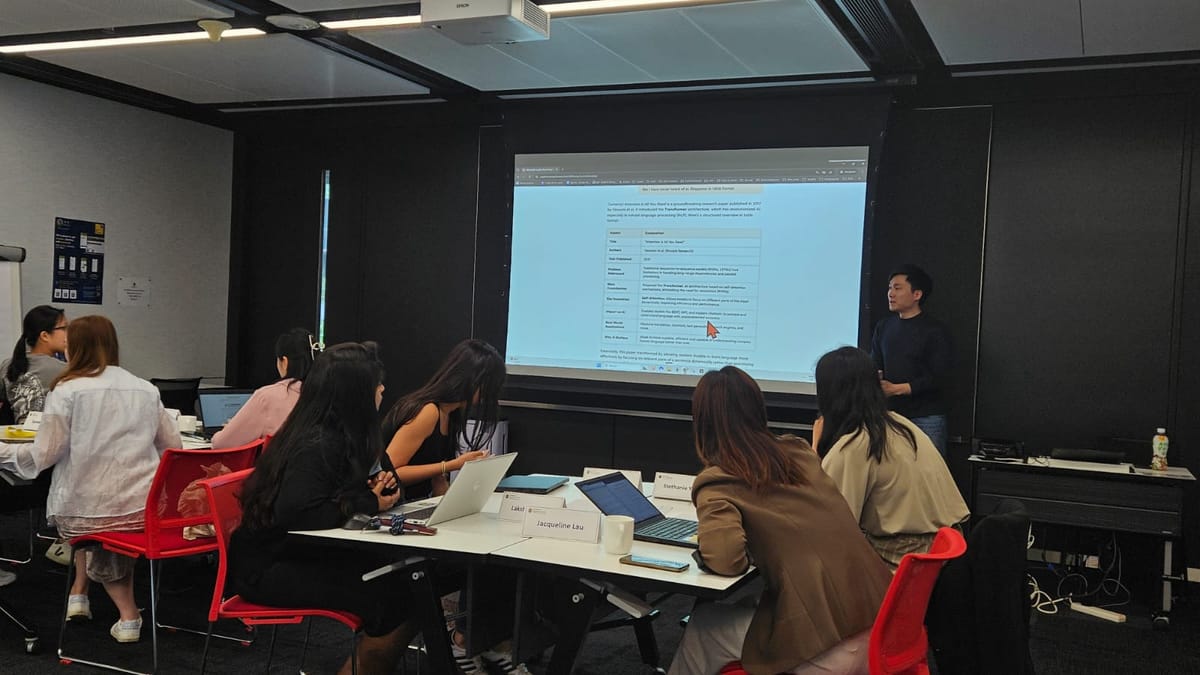
By day two, participants were combining all three layers into single prompts and applying them to their actual work. Several built prompt libraries for their departments before the workshop ended -- standard formats for meeting summaries, project updates, stakeholder emails. Others adapted the three-layer pattern for tasks I hadn't anticipated, which is when you know a framework is actually working rather than just being tolerated.
Feedback scores landed between 4 and 5 out of 5 across the group. But the thing I was watching for was whether they were using the framework a week later without me in the room. The early reports suggested they were -- not because the framework was particularly elegant, but because they'd practiced it enough times on their own material to make it automatic.
If you're building AI capabilities for emerging leaders in your organization, I'd be happy to share what I've learned. Connect with me on LinkedIn.
